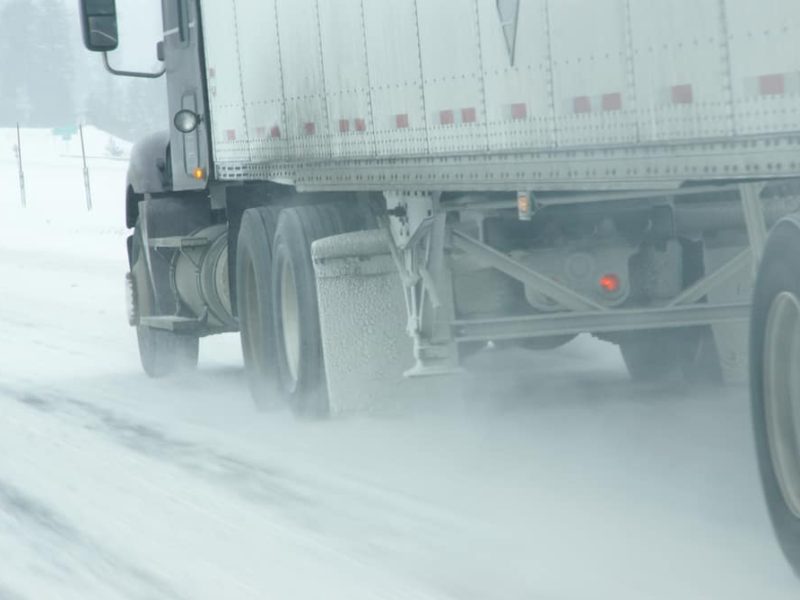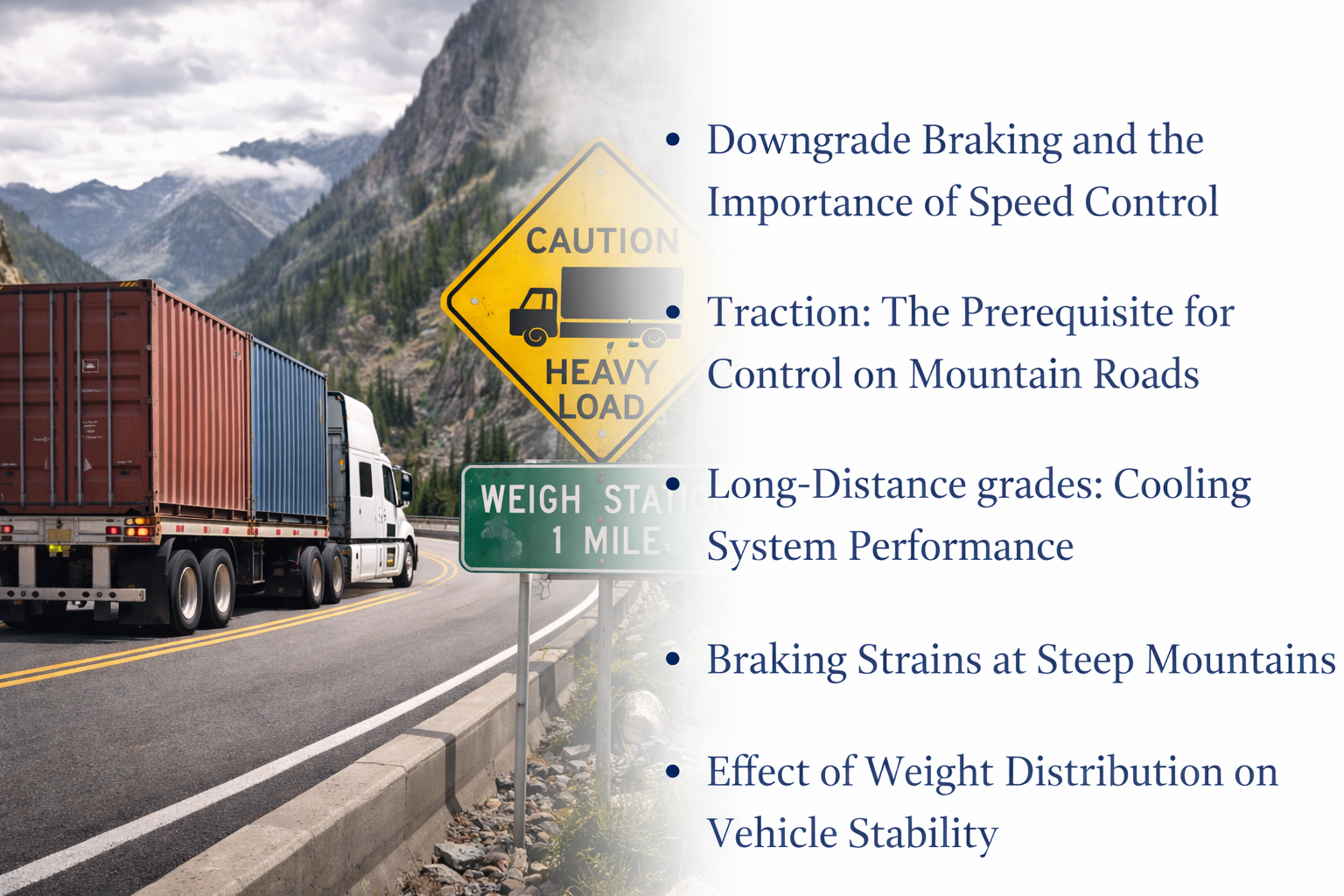
Driving in the mountains is one of the hardest environments for truck drivers. Long climbs, steep gradients, tight curves, and unpredictable conditions in the alpine forests put a heavy burden on both the driver and the vehicle. In such extreme cases, driving skills alone do not guarantee safety. Safety is a matter of proper alignment of vehicle specifications with mountain driving conditions. These challenges become especially pronounced on steep grades, where both mechanical limits and driver judgment are tested simultaneously.
In particular, traction, cooling, braking systems, and weight of the vehicle interact and have direct influence on the control, stability, and stopping power of vehicles while driving on mountain roads. If these features are well-designed and well-used, they will make sure the vehicle’s safe way up and down the mountain. If they are not, the situation can slip out of hand very quickly.
This article shows how trucks specifications set the standard for mountain driving safety and explains why trucks that work perfectly on flat highways might have a hard time or even fail to pull steep mountain routes.
Mountain Terrain and the Unique Demands on Trucks
Mountain terrain poses a set of challenges that are different from ordinary highway driving. The extended uphill pulls put a strain on the vehicle performance and cooling system, whereas long downhill braking zones expose the weakness in braking efficiency and weight distribution. With the additional presence of narrow lanes, sharp curves, and unpredictable weather, the margin for error shrinks to nothing. Constant changes in weather and road surface create unstable mountain conditions that magnify even minor technical shortcomings.
Mountain roads do not forgive any mistakes. A vehicle that overheats, loses traction, or suffers brake fade cannot be easily recovered. That is the exact reason why mountain driving safety is the matter of technical readiness first, before the plan B of improvisation.
How Trucks Handle Steep Mountain Passes: The Engineering and Skill Behind Safe Mountain Driving
Key mountain-related stress factors for trucks include:
- Extended uphill pulls that push engine and cooling limits
- Long downhill braking zones that accelerate brake wear
- Tight curves that reduce stability and recovery margins
- Narrow lanes that limit corrective steering options
- Rapid weather and surface changes that affect traction
Mountain Driving Stress Factors and Vehicle Impact
| Mountain Factor | Primary Stress Area | Safety Impact |
| Long uphill climbs | Engine and cooling system | Risk of overheating and power loss |
| Steep downhill grades | Braking system | Increased brake fade risk |
| Sharp curves | Tires and suspension | Reduced stability and control |
| Narrow lanes | Steering and handling | Limited recovery margin |
| Variable weather | Traction systems | Loss of grip and braking efficiency |
Traction: The Prerequisite for Control on Mountain Roads
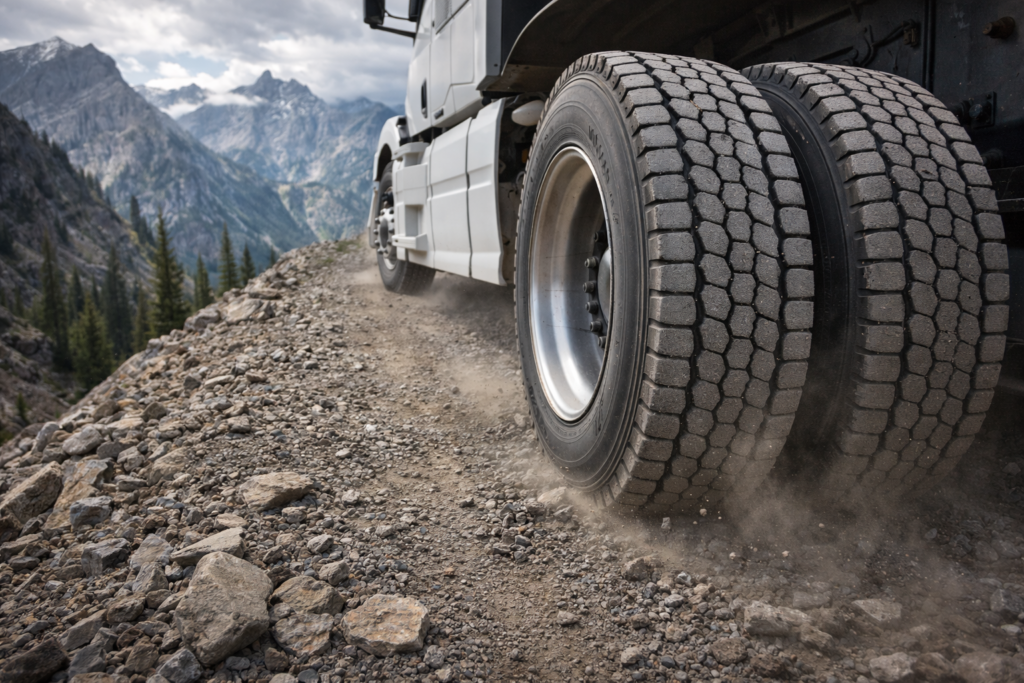
Tire traction is the first barrier that a car encounters while driving on a mountain. Without sufficient tire traction, steering, braking, and acceleration are all less dependable. Loss of traction immediately affects vehicle handling, especially when cornering downhill or adjusting speed mid-curve.
Attraction control systems are effective in reducing the wheel spin during acceleration, chiefly in extreme slopes or wet and icy road environments. In mountain driving conditions, they help to maintain vehicle stability by equalizing the torque across the drive axles. Still, attraction control works only if the tires are set properly.
The kind of tire one chooses, the depth of the tread, and the airing of the tire are three major factors affecting a truck’s particular reaction on rocky terrains, hilly routes, and differences in adhesion drag. Badly worn tires during heavy pulls upstairs and on the contrary while brakes are insufficiently distributed lead to the risk of loss of control.
Long-Distance grades: Cooling System Performance
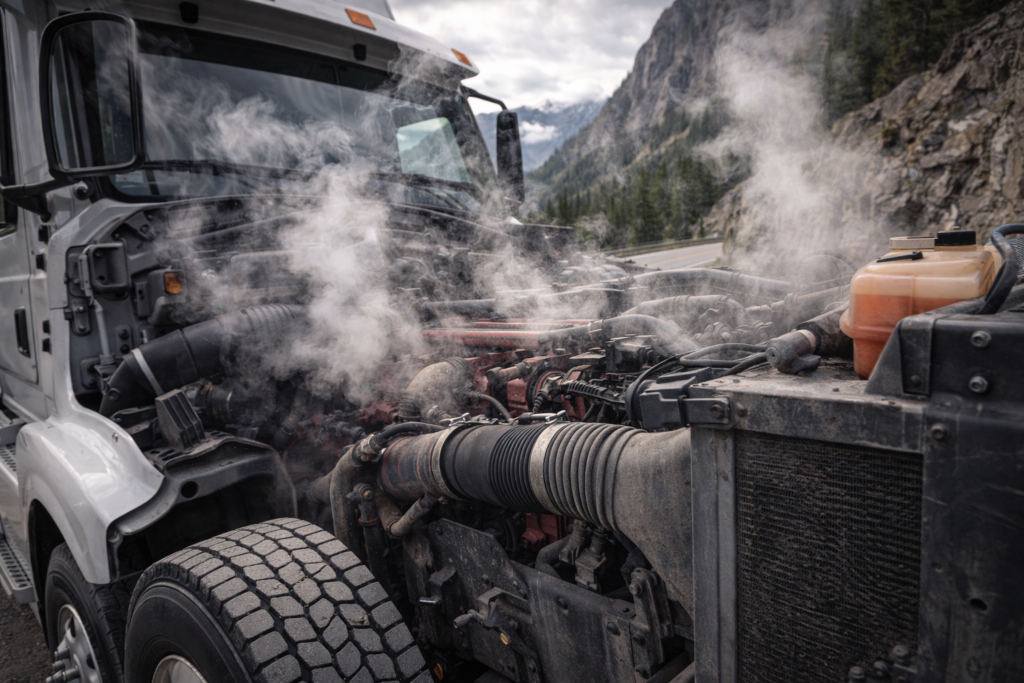
If the mountain grade is steep and the truck has an engine, transmission, and drivetrain, it will be subjected to increased torque and heat. So, the cooling of the engine is the primary thing to take care of, it is not just the comfort issue. Cooling failures on long climbs often cascade into broader vehicle safety features becoming ineffective under stress.
If the engine works without proper cooling it means there is less power, it will be running hot, or it can even fail near the top of the mountain. The performance of a cooling system is a factor of the radiator’s size, airflow, coolant quality, and the capacity to get rid of heat during a continuous load.
Driving downhill with a truck shows flaws that could not be detected on casual hauling. A truck that runs at a normal temperature in a flat highway may quickly overheat if it has to deal with the hauling of heavy loads in an uphill direction for some time. The absence of engine cooling will trigger the recovery of the truck from a dangerous position on the road.
Braking Strains at Steep Mountains
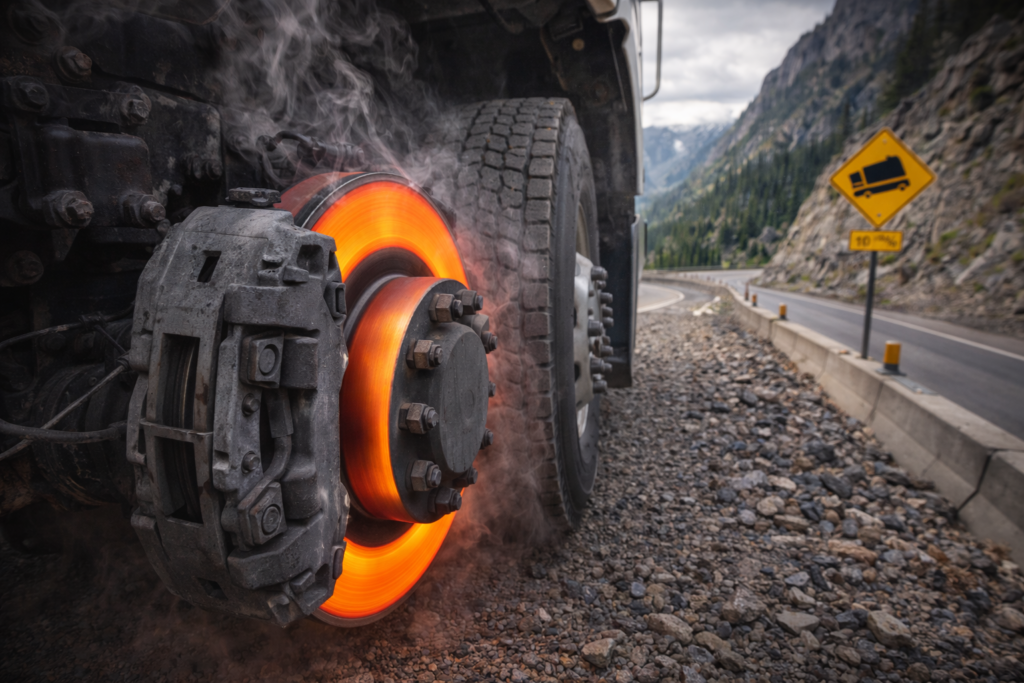
The brake system is maximally stressed while moving steep downhill. In fact, the angle of the hill and the heavy cargo force the brakes to take the hit of the high energy.
Brake fade, which is the case when the brake pads that have been overheated become less effective or as a result leads to a longer stopping distance or even complete failure of brakes, is one of the most dangerous situations in the mountains. Vehicle brakes must be designed for braking downhill for a long time without overheating. Preventing brake fade is critical to maintaining a safe descent on prolonged downhill sections.
The current trend is for trucks to utilize multi-layer braking: service brakes, engine braking, and auxiliary systems. The anti-lock brake system is the best solution to the problem of steering control in emergency braking but it cannot replace the overheated brake components. Manage your speed to make sure the heat doesn’t build up brake but don’t just react to things being compromised in braking capacity.
Mountain Driving 101: How truck brakes work, and how they overheat (Episode 1)
Downhill Braking Load and System Response
| Driving Condition | Brake System Load | Resulting Risk |
| Prolonged downhill braking | Continuous heat buildup | Brake fade |
| Heavy vehicle weight | Increased stopping distance | Reduced braking efficiency |
| High descent speed | Excessive brake energy | Loss of braking control |
| Limited engine braking use | Overreliance on service brakes | Overheating |
| Emergency braking | Peak system stress | Loss of stability |
Effect of Weight Distribution on Vehicle Stability
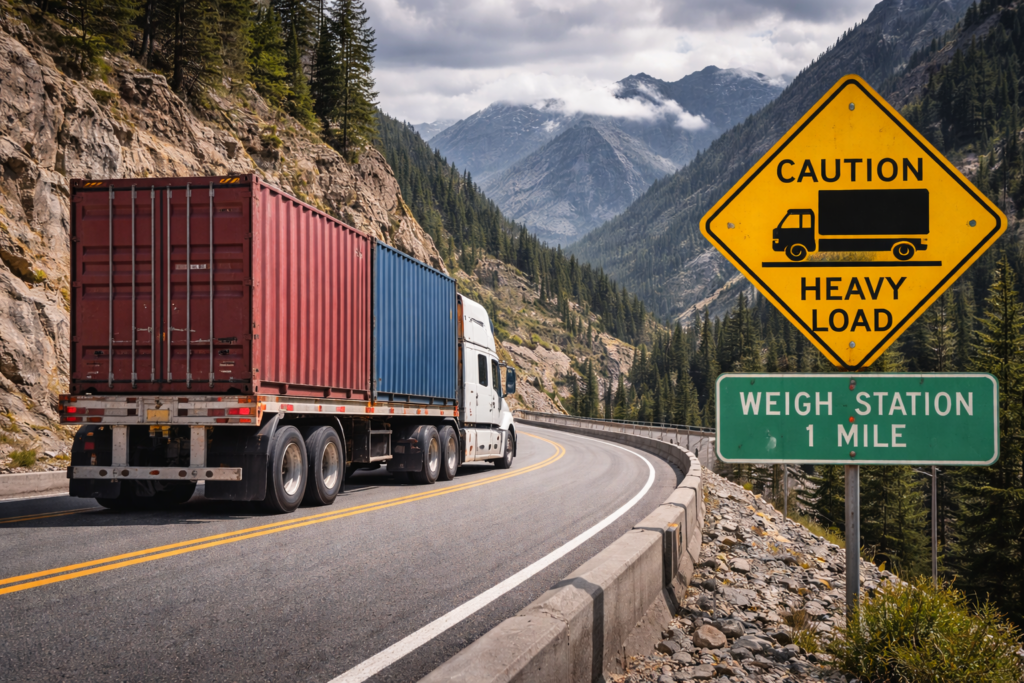
The vehicle weight and the distribution of weight are the critical parameters for mountain driving safety. Improper weight balance not only affects braking but also the overall handling of the vehicle.
When weight is distributed unevenly some of the axles are going to be overloaded, while the others are going to lose their grip. Hill grades make the problem worse by elevating stopping distances and reducing the predictability of downhill braking. It is very noticeable to how much every little defect or problem can be exacerbated due to the truck being loaded heavily, especially when driving on twists and turns on every type of road.
Correct weight distribution keeps braking efficiency, improves tire contact, and decreases loads on the suspension. In mountain terrain, the uniform distribution of weight becomes not just a code to follow, but a matter of the truck’s control.
Inbuilt Safety Features for Mountain Conditions
Modern safety features for the vehicle are engineered specifically to tackle the challenges of mountain driving including traction control systems, anti-lock braking systems, engine braking, and advanced cooling solutions. Some trucks also benefit from off-road specifications, which enhance durability and stability under continuous elevation changes.
Off-road specifications besides additional benefits in mountainous environments, such as reinforced suspension, enhanced braking components, and improved airflow for cooling systems, often carry risks of their own. While not every mountain route qualifies as off-road, these specifications improve durability and vehicle performance under continuous stress.
With the inclusion of the above-mentioned driver techniques, they create a multilayered approach to safety, to handle everyday operations and to cope with emergency situations.
Downgrade Braking and the Importance of Speed Control
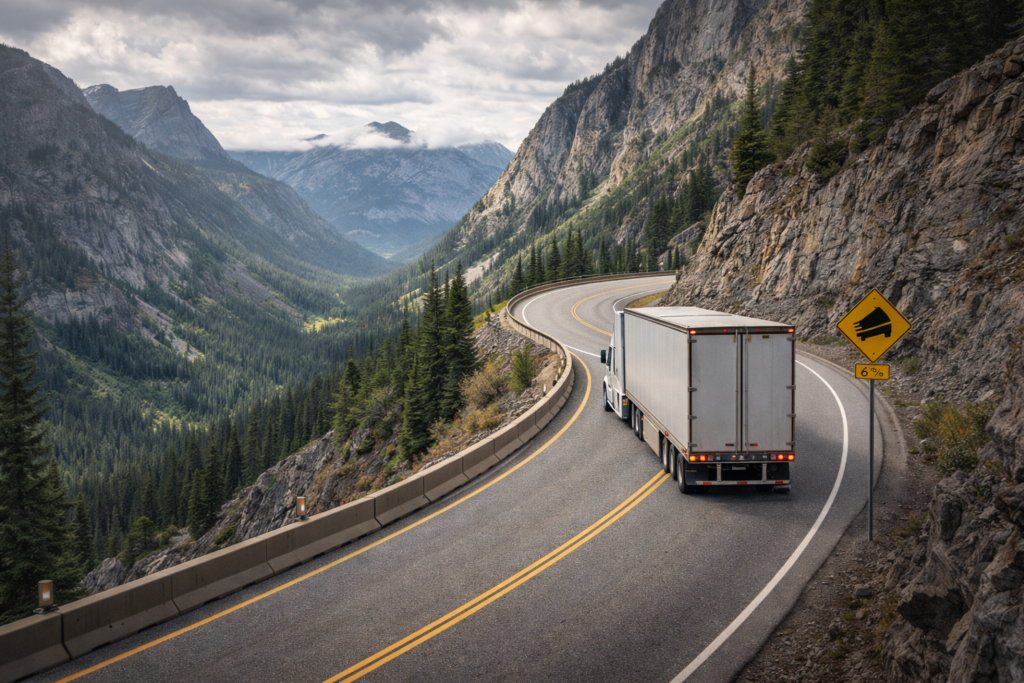
Downgrade braking is where most mountain incidents happen. Safe descent depends on the control of speed first before gravity kicks in.
Effective downhill control relies on the following principles:
- Selecting a safe entry speed before starting the descent
- Using engine braking as the primary speed control method
- Applying service brakes intermittently rather than continuously
- Monitoring brake response and temperature behavior
- Allowing sufficient spacing for emergency braking if needed
If the driver uses only brakes on a long descent the heat will go up quickly and the brake fade will set in. The primary means of speed control should be the engine braking while the service brakes are used intermittently to fine-tune the speed if necessary.
The right use of the truck’s brake system, the preservation of vehicle stability, and allowing the driver to remain calm in the face of unexpected obstacles are the major benefits of effective downhill braking.
Vehicle Specifications as a Safety Tools, Not Just a List to Tick
Mountain driving is not a result of a particular part. It is how vehicle specifications collaborate when stressed that leads to the outcome. Traction, cooling, brakes, and weight are a unified system, not simply a different feature.
If a truck is designed for the mountainous area, it shows predictable performance, it is maneuverable under the load, and it gives the driver time and choice to act when conditions change. Lacking sufficient specifications, the vehicles will make the drivers act reactively, which will, in turn, increase the risks at every traveling mile.
In commas
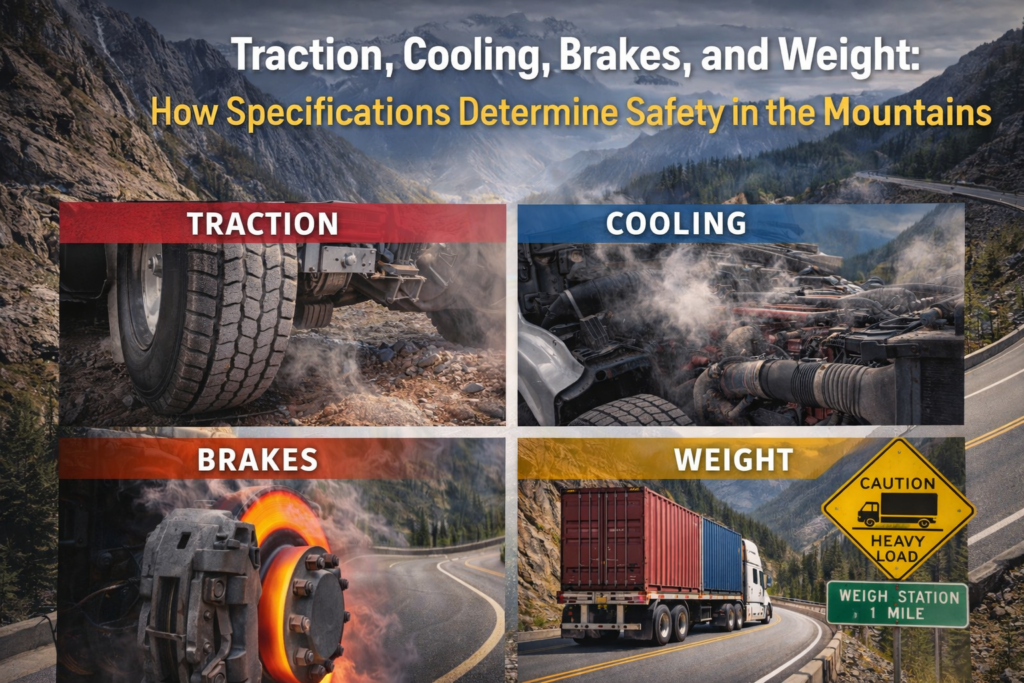
Driving mountain roads is not the same as drifting in a flat truck on a spare road. The safety of truck drivers mainly depends on the specifications of the trucks. The way a truck handles mountain roads, controls temperature, maintains traction, and descends is determined by the specifics given for the truck. Truck drivers need to gain knowledge about traction control, cooling system performance, vehicle brakes, and weight distribution interactions. Mountain conditions reveal all design and preparation shortcomings in vehicles.
Once vehicle performance meets the demands of mountain terrain, drivers are rewarded with stability, control, and confidence. In the mountains, that alignment is not optional—it is the difference between controlled operation and preventable risk.