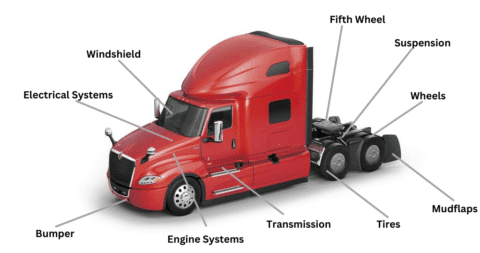
The new truck drivers’ gang often perceive truck specifications and trailer specifications to be mere technical codes. Mostly they consider them as a determining factor for mentorship programs in mechanics or engineers. Accordingly, a section after section occupied with difficult terms like the gross vehicle weight rating (GVWR), the gross combined weight rating (GCWR), the axle ratings, and truck dimensions is likely to make the impression of a swimming fish to the lost art student. Yet, practical driving experiences talk back to them in a different way. Each roadside inspection, weight station visit, and load acceptance choice reverberates back to these commercial vehicle specifications.
At an early stage, basic trailer specs and tractor limits often appear abstract, but they quickly become practical reference points once a driver starts operating a real truck and trailer combination.
Core Truck and Trailer Weight Ratings
| Specification | What It Represents | Why It Matters |
| GVWR | Maximum legal weight of the truck alone | Prevents overloading the tractor |
| GCWR | Maximum combined weight of truck and trailer | Defines total load limits |
| Axle Rating | Maximum load per axle | Critical for scale compliance |
| Payload Capacity | Allowable cargo weight | Determines usable freight weight |
The thing that is the only thing people who learn the trailer specs are about is about playing with the weight that actually may have the same effect as reducing speed.
Safety is a multifaceted aspect of truck specifications and trailer specifications that is really not only about memorization. It is a beginner guide to start learning how equipment limits are caused by errors contact with safety, compliance, and profits. A person who has just started to learn the new words and phrases is more than a single one who acquires them. The person has security and power because he/she understands the technical specifications.
This shift marks the transition from passive reading to understanding trailer specs as a daily operational skill rather than a theoretical exercise.
Why Specifications More Than the New Drivers Perceive
New hires often think that it is only “bad luck”, or human error that can make compliance issues arise. The fulfillment of the harsh facts is the fact that these violations mostly start much earlier and at the time when the equipment’s limits are not respected properly. Truck specifications are like rules that specify which you have to obey on the road, where you are and how the vehicle behaves loaded.
For beginners, learning important specifications early prevents violations that are later blamed on circumstances or inspection pressure.
Probationary drivers find themselves at the edge of breaking the law with some daily operations. These limitations also protect carriers from claims and the destruction of their equipment. The fact that a truck exceeds its rated limits does not show damage initially. There is overheating of the brakes, fatigue of the spring components, and erratic handling of the vehicle. In the end, these hidden forces lead to breakdowns, violations, or crashes.
Common early mistakes new drivers make when ignoring specifications include:
• Accepting loads based only on estimated weight
• Relying on engine power instead of rated limits
• Assuming staying under GCWR automatically ensures compliance
• Overlooking axle distribution during loading
In my opinion, being aware of specifications at an early stage transfigures reading specifications into a preventive skill rather than a reactive necessity.
How Truck Specifications Make a Picture of the Vehicle
Truck specifications refer to legal and mechanic restrictions set on the tractor, including semi-truck specs and heavy-duty truck specs used in long-haul operations. They describe the bearing of the truck’s own axles and the total weight it may have when it pulls a trailer. Such limitations are in force because every single part like the frame, brakes, axles, tires, and suspension has been made for a particular_load by the manufacturer.
Learning reading truck specs correctly helps drivers understand how these limits interact rather than viewing each number in isolation.
GVWR stands for gross vehicle weight rating which is a reference number that establishes the maximum weight that is safe to the truck when loaded with a driver and other baggage. This includes the weight of the driver, tools, and any additional equipment mounted on the tractor, plus the truck’s own fuel. Newbies often underestimate how weight adds up over time, especially the time when they fill tanks with fuel.
GCWR refers to gross combined weight rating, which shows the allowed maximum total weight of the truck and the trailer together and the number that allows to extra load. Consequently, it is the specific measure of the load that is permitted to be carried. The GVWR and GCWR are the assigned ratings by the manufacturer, which clarify the conditions for a vehicle to be regarded as a commercial vehicle, and thus create a legally binding operation weight limit that must be adhered to. Source: https://www.fmcsa.dot.gov/regulations/company-has-truck-gvwr-under-10001-pounds-towing-trailer-gvwr-under-10001-pounds-0
The process of learning these ratings entails making a clear distinction between assumptions and knowing how to read specs accurately.
Truck Specifications vs Operational Impact
| Truck Spec | Operational Effect | Risk if Ignored |
| GVWR | Determines legal tractor load | Fines, brake damage |
| GCWR | Controls total hauling capacity | Drivetrain stress |
| Axle Ratings | Affects handling and braking | Scale violations |
| Dimensions | Impacts routing decisions | Bridge or access issues |
Vehicle Weight Ratings Explained (GVWR, GCWR, GAWR, GTWR) with HaulGauge founder Michael Hall
Why the Axles Are a Mic Challenge
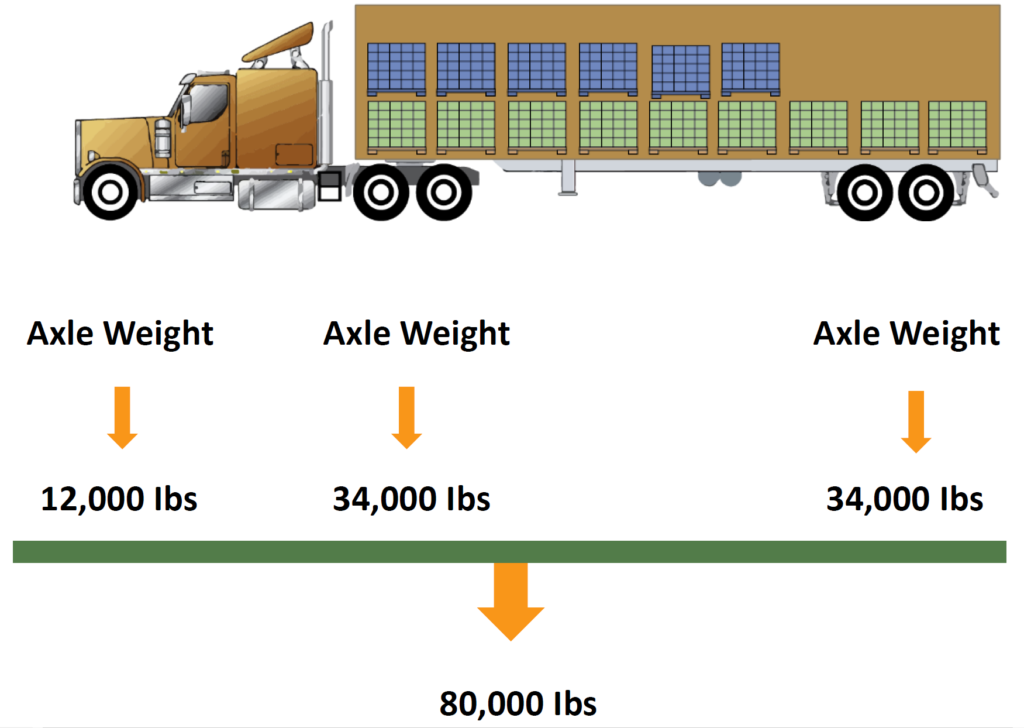
Axle ratings are a single big note that most people don’t understand, the trickiest part of the commercial spec. Most beginners have an impression that it is possible to carry a lot of weight if not for general gross weight restrictions to worry about. This implication differs from the law’s perspective.
Each axle has a maximum load it can handle. Partial GCWR status can still exist when the weight is not allocated appropriately and the axle limitations are breached. Safety issues can be caused by improper weight distribution, such as decreased braking efficiency and uneven tire wear.
Truck drivers are no less careful with axle ratings as they are with total weight because real-world operations require both payload capacity and balance to be interdependent.
Axle overload commonly leads to:
• Reduced braking performance
• Uneven and accelerated tire wear
• Increased suspension stress
• Immediate scale violations
#GVWR – What Is It? Vehicle Weight Ratings Explained (GVWR, GCWR) w/All About Trailers
The Importance of Trailer Specifications
When trailer specifications enter the field, just a simple truck-trailer combination here, whole picture seen already. While the tractor is responsible for propulsion and control, the trailer performs the freight-carrying task, and it has its own limits that must be observed.
Learning lorry Trailer specifications is a significant part of learning about lorry trailers; especially in dealing with different axle configurations and suspension designs. Two trailers of the same length may carry very different legal ratings.
This is where understanding trailer specs prevents load decisions that appear acceptable on paper but fail in real conditions.
Newcomers sometimes think that a powerful truck can mask a weaker trailer, but the reality is that the lowest rated component always determines the limit.
Trailer Specifications Beginners Must Monitor
| Trailer Element | Why It Matters |
| Trailer GVWR | Sets maximum cargo weight |
| Axle Configuration | Affects load distribution |
| Suspension Type | Impacts ride stability |
| Trailer Dimensions | Determines route access |
Dimensions Shape Routes and Freight Options
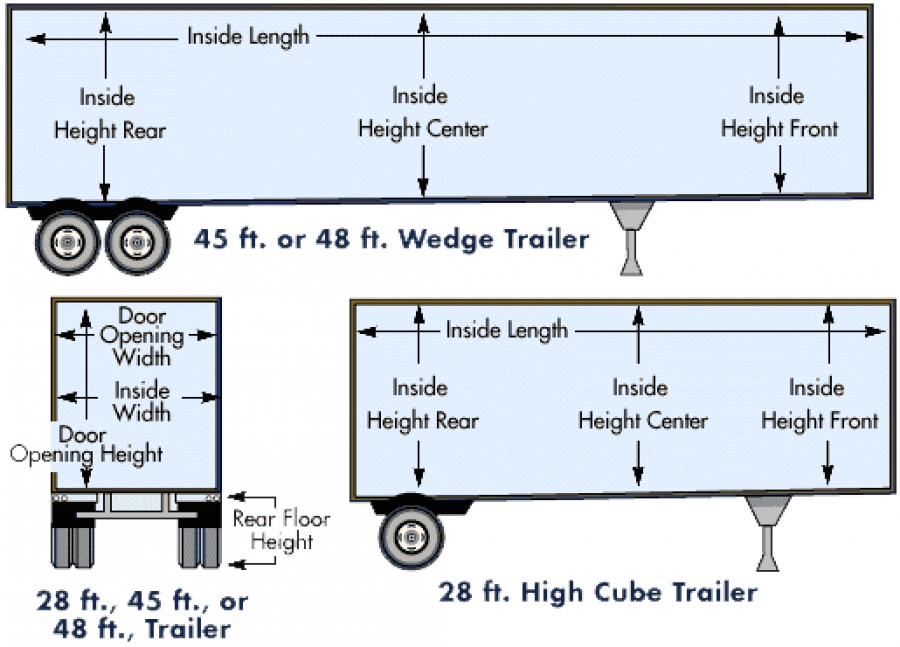
Truck and trailer dimensions directly influence route planning. Height, width, and length determine whether a vehicle can safely pass under bridges, navigate city streets, or access certain facilities.
Overheight or overwidth loads may require permits and restricted routes. Even standard trailers behave differently depending on length, especially when backing or navigating tight turns.
Understanding truck dimensions is essential for avoiding routing violations and operational delays.
Payload, Towing Capacity, and Real Limits
Payload capacity and towing capacity are often misunderstood because they are influenced by multiple specifications. Payload capacity is not a single fixed number; it depends on how much weight the truck itself already carries.
A truck with a powerful engine can still be legally limited if its ratings are exceeded. Drivers who understand this avoid overconfidence and make informed decisions when evaluating loads.
Commercial Vehicle Specifications and Compliance
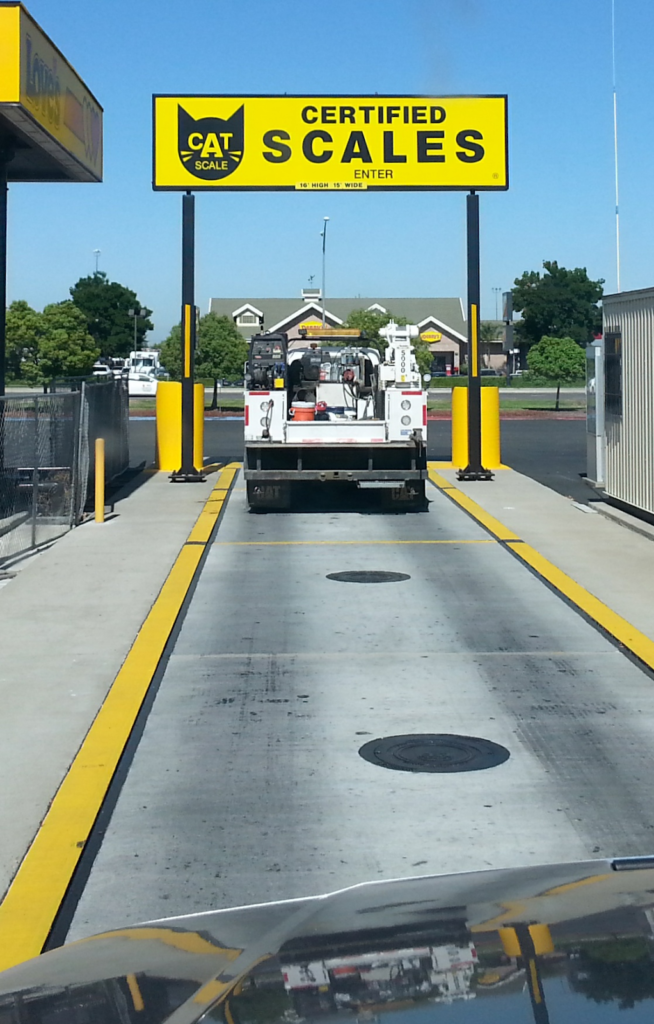
Specifications are the framework of regulatory compliance. The inspectors are relying on the documented limits not on the plans made by the driver. A driver who is aware of the specifications of commercial vehicles will not face any problems thus will give prompt answers during inspections.
This information is going to be the best way to reduce the time and stress for all sides and to create a good image of professionalism.
How Beginners Should Read the Specifications in Practice
Getting muddled by the multitude of numbers is the last thing that should affect the beginners. Instead it is quite logical to have a direct plan for reading the specs. Find out GVWR and GCWR at first, after that review axle ratings, confirm trailer limits, and on the last compare anything against real load conditions.
This structured approach transforms reading specifications into a practical decision-making process instead of an academic task.
A practical order for reading truck and trailer specifications includes:
• Identifying GVWR and GCWR first
• Reviewing axle ratings next
• Confirming trailer GVWR and axle limits
• Comparing all values against actual load conditions
Such methodical approach helps in converting the technical documents into the practical tools.
The Long-Term Value of Understanding Specs
By dealing with the specifications as the means of learning, the drivers qualify for the better freight and specialized hauling in the long run. The drivers who are aware of limits gain the trust of the fleet because they reduce risks and protect the assets.
It is true, but generally, drivers who become masters in specs are those who ride the fastest, make more money each time, and sidestep costly missteps that halt their careers.
Final Thoughts
Truck and trailer specifications are not like the dam walls to obstruct the flow of success; instead, they are the road signs to guide you. The base of it is that the students will learn how to read basic truck specs and trailer specs therefore they will earn confidence, safety, and professionalism just from day one.